Example: I want to understand statistics well enough to read research papers without getting lost.
What do you already know?
Be honest, zero judgment. Example: I passed a stats class ten years ago and remember almost nothing.
Where will you use it?
Example: I want to understand how GPS satellites keep time.
Your wishes
✦ You have 1 wish. Granting a course spends one.
OmniTaughtA
Lv 1Lv 270 XP to go
The Strange Universe · Lesson 1 of 40 · 6 min
Is the Moon There When Nobody Looks?
Einstein's question about the moon, what quantum means, and the 2022 Nobel Prize that answered part of it
0:00 / 6:00
1x1.25x1.5x
Albert Einstein stopped in the middle of a walk, turned to Abraham Pais, a young physicist (a scientist who works out how matter, light and energy behave), and asked him a strange question. Pais told the story in a 1979 article about Einstein and quantum theory, the physics of the very small. In his words: "We often discussed his notions on objective reality. I recall that during one walk Einstein suddenly stopped, turned to me and asked whether I really believed that the moon exists only when I look at it."
Objective reality here means a world that is there, in a definite way, whether or not anyone looks. Both men worked at a research institute in Princeton, New Jersey, the Institute for Advanced Study, which Pais joined in 1946.
In 1935 he and two colleagues published an argument that quantum theory fails to give a complete description of physical reality. His target was a claim at the heart of that theory: that physical properties, facts about a thing such as where it is or how fast it moves, have no reality of their own until they are observed. So the moon was a way into a sharper question. Do things have definite properties when nobody measures them?
The question in plain words
Think of an apple that sits on a table in a dark kitchen. Common sense says it is red whether or not anyone is looking. A coin under a cup is already heads up or tails up before you lift the cup.
Physicists call this idea realism. It means that objects have definite properties, such as a color or a position, even when nobody checks.
Quiz now, while it is fresh. 8 questions, no timer.
OmniTaughtA
Is the Moon There When Nobody Looks?
The one thing worth keeping
Your most valuable takeaway · +30 XP
What is the single most valuable thing you take from this lesson? One sentence is plenty.
The most valuable thing here is...
One sentence earns you 30 XP, the moment you save it. It goes into your notes for this lesson too.
OmniTaughtA
←1/8
OmniTaughtA
Lv 1Lv 270 XP to go
Congrats, perfect!
The Strange Universe · Is the Moon There When Nobody Looks?
100%
+75 XP · first pass
Nothing missed. Six flashcards joined your review deck.
Level up
You've just reached Level 2!
Student
115 XP
Your story · chapter 2
The town is gone behind the trees and the map is already wrong. You correct it as you walk, boots in muck to the ankle, ink going everywhere.
On this rung · 2 rewards
New card back
Summitfor your review deck
New card back
Northern Lightsfor your review deck
Next · Level 3 Reader
135 XP to go
OmniTaughtA
In the library
More to learn in the library
ASACT Science: Deep Dive11 lessons · Deep Dive Test Prep
%Statistics Literacy13 lessons · Math
×%Mental Math Essentials14 lessons · Math
🧠Study Less, Remember More3 lessons · Life Skills
✨AI for Everyday Life12 lessons · Life Skills
Every course here is included. One account, the whole library.
Learn physics, from everyday life to the edge of reality.
or learn anything with Custom Courses tailored to your needs.
I have found OmniTaught to be a wonderful learning tool, I find myself learning a lot and quickly. The app is easy to pick up and go! It provides TONS of courses and they all seem to be up to date with current materials.
Devin M.
How it works
Create a custom course, or pick from our library.
OmniTaught5 day streakA
Lv 9Lv 101,200 XP to go
Topics
Pick as many as you like. Each one is built the same way: short lessons, drills, and review that remembers what you forget.
Topic Genie ✦MAKE ONE
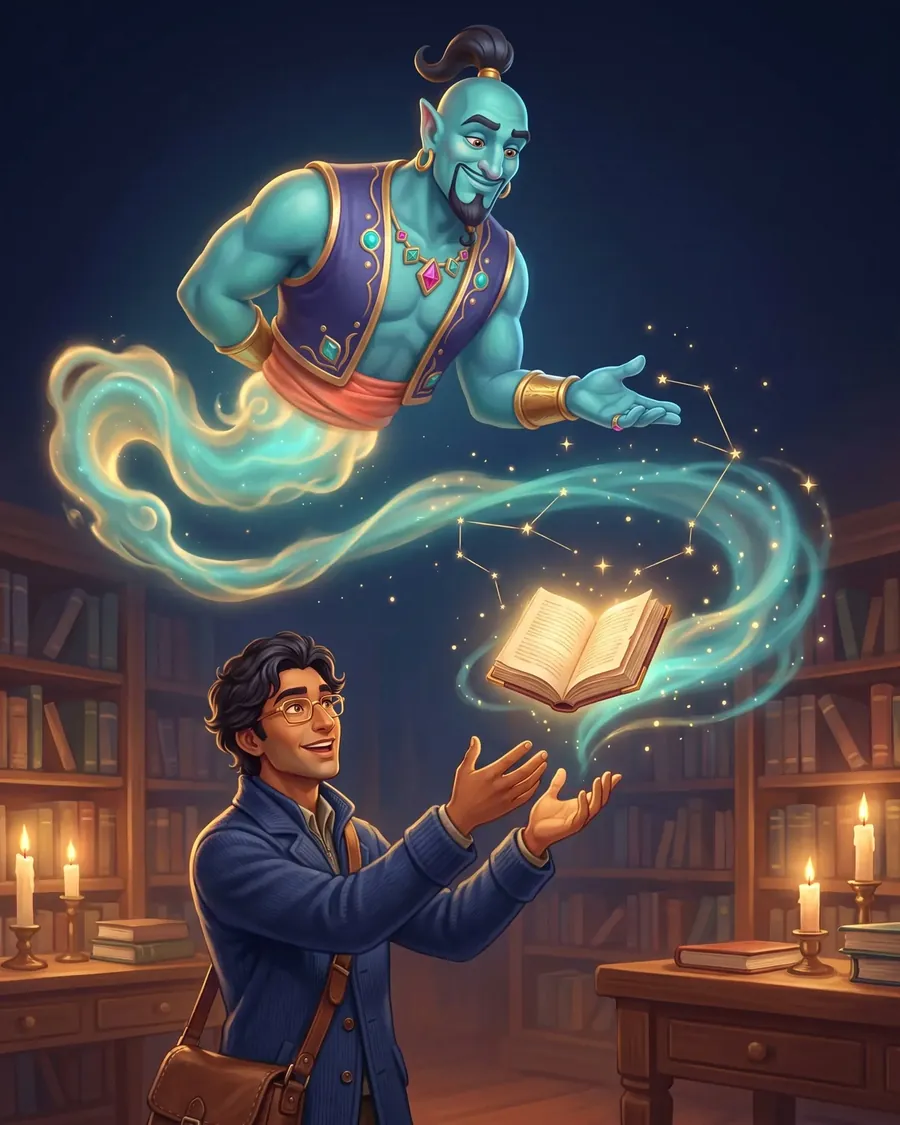
Not in the library? Wish for it and the Genie builds the course: lessons, quizzes, flashcards
Short lessons.
OmniTaught5 day streakA
Lv 9Lv 101,200 XP to go
The Strange Universe · Lesson 1 of 40 · 6 min
Is the Moon There When Nobody Looks?
Einstein's question about the moon, what quantum means, and the 2022 Nobel Prize that answered part of it
Albert Einstein stopped in the middle of a walk, turned to Abraham Pais, a young physicist (a scientist who works out how matter, light and energy behave), and asked him a strange question. Pais told the story in a 1979 article about Einstein and quantum theory, the physics of the very small. In his words: "We often discussed his notions on objective reality. I recall that during one walk Einstein suddenly stopped, turned to me and asked whether I really believed that the moon exists only when I look at it."
Objective reality here means a world that is there, in a definite way, whether or not anyone looks. Both men worked at a research institute in Princeton, New Jersey, the Institute for Advanced Study, which Pais joined in 1946.
In 1935 he and two colleagues published an argument that quantum theory fails to give a complete description of physical reality. His target was a claim at the heart of that theory: that physical properties, facts about a thing such as where it is or how fast it moves, have no reality of their own until they are observed. So the moon was a way into a sharper question. Do things have definite properties when nobody measures them?
The question in plain words
Think of an apple that sits on a table in a dark kitchen. Common sense says it is red whether or not anyone is looking. A coin under a cup is already heads up or tails up before you lift the cup.
Physicists call this idea realism. It means that objects have definite properties, such as a color or a position, even when nobody checks.
What quantum means
Quantum physics is the physics of the very small: atoms (the tiny pieces that ordinary matter is made of), light, and the particles inside atoms, which are smaller pieces still. Its name comes from a discovery about energy, which is what it takes to make something move, heat up or give off light. At that scale, energy comes in fixed little amounts, called quanta, rather than any amount you like. Measuring works very differently at that scale.
What measuring means to a physicist
Two meanings of observeIn everyday speech, a person looking. In physics, any interaction that could leave a record, like a detector such as a Geiger counter clicking, or an air molecule bumping a particle.
In everyday speech, observing means a person looking. In physics, to measure or observe something means to interact with it in a way that could leave a record. A detector counts: a device that clicks or flashes when a particle hits it, like a Geiger counter catching radiation. So can a stray air molecule, one of the tiny bits that air is made of, when it bumps into a particle. No person needs to be watching. Lesson 9 asks whether a mind plays any special part.
Einstein's side
Einstein held two beliefs. First, things have properties whether or not anyone measures them: the moon is there, and so is the position of a tiny particle. Second, nothing travels faster than light, so what happens here cannot instantly change a result far away.
In later years he set out this view most plainly in letters to the physicist Max Born. He called what quantum theory seemed to need "spooky action at a distance", which his second belief rules out. Physicists call the pair of beliefs local realism: "realism" is the first belief, and "local" is the second, that nothing here can instantly change things far away.
The other side
Niels Bohr, the Danish physicist who won the 1922 Nobel Prize in Physics (a prize for discoveries of the greatest benefit to humankind) for his work on the structure of atoms, saw it differently. Bohr and others argued that an unmeasured particle's properties are not just unknown to us. They are not yet fixed until a measurement happens.
One rough picture is a spinning coin, which is heads or tails only once it lands. But a spinning coin has a definite tilt at every moment, while a tiny particle may lack some properties before it is measured.
For about thirty years many physicists treated the dispute as philosophy, a matter of arguing about ideas, rather than physics, which settles questions by experiment. Then John Bell, a physicist from Northern Ireland, found a kind of experiment that could tell the two sides apart.
The answer from experiments
Why one of Einstein's beliefs has to giveEinstein believed two things: that things have properties before anyone measures them, and that nothing travels faster than light. Together they make local realism, which the experiments behind the 2022 Nobel Prize rule out for the very small. So at least one belief has to give, and which one is still argued about.
Experiments later settled part of it. The Nobel Prize in Physics is awarded by the Royal Swedish Academy of Sciences, a body of scientists in Sweden. In 2022 it went to Alain Aspect, born in France, John Clauser, born in the United States, and Anton Zeilinger, born in Austria, for experiments with linked pairs of particles of light.
Their work, built on Bell's test (the kind of experiment he found), shows that the world cannot work by local realism, Einstein's pair of beliefs. So, for the very small, at least one of Einstein's two beliefs has to give.
Key idea
For the very small, experiments show you cannot keep both of Einstein's beliefs: that things have definite properties before anyone measures them, and that nothing travels faster than light. Which one gives way is still argued about.
How linked particles make that possible is lesson 13. The course climbs to the prize one step at a time, starting with light.
A headline, and a myth
In 2022 the magazine Scientific American ran the headline "The Universe Is Not Locally Real, and the Physics Nobel Prize Winners Proved It." The prize committee's own citation, its short official statement of what the prize is for, praises "experiments with entangled photons", pairs of linked particles of light.
You may also have heard a bigger claim online: that the universe only "renders" when someone looks, the way a video game draws only what is on your screen. That is not what the prize showed. In these experiments, detectors recorded every result with no person watching. The measuring devices were filters that test a property of light called polarization (lesson 12). In one test, the color of light from distant galaxies (huge collections of stars, gas and dust) chose how the filters were set.
The idea sounds right because measuring does matter in quantum physics, and "observe" sounds like a person looking. Lesson 19 explains where the idea goes wrong and what the experiments do rule out.
Quantum physics in your pocket
From your phone to one transistorA phone's chip holds more than 10 billion transistors, and each one is a tiny switch. Generated picture with drawn labels.
The Nobel committee calls the transistors in computer microchips "established quantum technology that surrounds us". Transistors are tiny switches that let electric current through or block it, and they are the basic building blocks of modern computing.
Some of the best smartphone chips hold more than 10 billion of them. So the phone in your hand runs on quantum physics. Lesson 11 explains how a transistor works.
The prize experiments were done with light, so the course begins there. Sunlight looks white, but it is made up of all the colors of the rainbow. So why is the sky above you blue, and not white?
Quizzes tell your brain this is important.
OmniTaught5 day streakA
Lv 9Lv 101,200 XP to go
Review, timed for just before you would forget.
OmniTaught5 day streakA
Lv 9Lv 101,200 XP to go
Recalling from memory is what makes learning stick, so OmniTaught has you do it three ways: write the key idea in your own words, answer a quiz while the lesson is fresh, and review it just before you would forget.Sources: The Nobel Prize in Physics and the Royal Swedish Academy of Sciences; NASA; US National Institute of Standards and Technology (NIST); CERN, LIGO and the Event Horizon Telescope; UNSCEAR, the International Atomic Energy Agency, the World Health Organization and the Radiation Effects Research Foundation; US Department of Energy and Environmental Protection Agency; Peer-reviewed papers in Nature and Physical Review.
What this course covers
40 lessons, each short enough to finish in one sitting and each ending with questions that make you use what you just read. The last is a timed review of the whole course.
Is the Moon There When Nobody Looks?Einstein's question about the moon, what quantum means, and the 2022 Nobel Prize that answered part of it6 min
Why the Sky Is Blue and Sunsets Are RedWhy sunlight, which is white, makes the daytime sky blue and the sunset red, and how tiny air molecules scatter it6 min
Light Is a WaveHow Thomas Young showed in 1803 that light is a wave, by finding dark stripes where two beams of light meet6 min
Light You Cannot See: Microwaves, Radio and X-RaysHow a melted chocolate bar led to the microwave oven, and why microwaves, radio waves and X-rays are all light our eyes cannot see6 min
Light Also Comes in LumpsWhy dim violet light knocks electrons out of some metals when bright red light cannot, and how Einstein's answer gave quantum its meaning6 min
Atoms Only Take Certain StepsWhy a neon sign glows only certain colors, and why a beam of silver atoms split in two instead of smearing7 min
Show all 41Show fewer
Why LEDs Glow: the Blue LED and Quantum DotsHow a chip the size of a grain of sand makes colored light, why a blue LED took three decades, and how quantum dots color a TV screen7 min
One Particle at a Time: Quantum ChanceWhy single electrons land at random spots yet build up stripes, and why quantum physics can only give the odds of where each one lands6 min
Superposition, and What "Measurement" Really MeansSchrödinger's cat, how a quantum thing holds two possibilities at once, and what really counts as measuring it7 min
Walking Through Walls: Quantum TunnelingHow a particle can pass through a barrier it does not have the energy to cross, why the sun needs it to shine, and the 2025 Nobel Prize for seeing it in a chip7 min
The Switch Inside Everything: the TransistorHow a sliver of semiconductor lets a small voltage control a bigger current, why that makes a switch and an amplifier, and who really built the first one6 min
What Your Sunglasses Know: PolarizationWhy polarized sunglasses cut the glare off water, why a phone screen can go dark through them, and what one photon, a single lump of light, does at a filter6 min
Entanglement: Einstein's 1935 ChallengeWhy two entangled photons always agree at filters turned the same way, and why Einstein argued in 1935 that their answers must be set in advance6 min
Bell's Test: Turning an Argument Into a NumberHow John Bell found a number that tells hidden instructions apart from quantum theory, and why entangled photons break it7 min
Clauser's Two-Dollar BetHow John Clauser and Stuart Freedman ran the first real Bell test with calcium atoms and filters, and why Clauser lost a bet he had made on Einstein7 min
Aspect Changes the Question Mid-FlightHow Alain Aspect closed a loophole in Bell's test by switching the filters while entangled photons were in flight, faster than any signal could carry the settings6 min
Closing Every Gap: Quasars and 100,000 VolunteersWhy physicists let ancient quasar light and 100,000 game players pick their settings, and how the gaps in Bell's test were closed7 min
Teleportation, Secret Keys and Quantum ComputersWhat entanglement is good for: teleporting a photon's state, making secret keys a spy cannot copy unseen, and quantum computers, and why none of it sends a message faster than light7 min
So Is the Moon There?What the Nobel experiments settled about Einstein's moon question, the rival interpretations of quantum physics, whether a mind plays a part, and the myth that the universe renders only when watched7 min
Static Shocks and LightningWhy a doorknob shocks you on a dry winter day, what Benjamin Franklin's kite really showed, and why lightning is the same kind of spark, enormously bigger7 min
Magnets, Superconductors and the LK-99 SummerWhat makes iron magnetic, how a superconductor carries current with no resistance at all, and why a flake hovering over a magnet in 2023 proved nothing7 min
Why Coffee Cools and Eggs Do Not UnscrambleWhy heat only flows from hot to cold, what entropy really counts, and why time seems to run in only one direction6 min
The Butterfly EffectWhy a rounding error in the fourth decimal place changed two months of simulated weather, why exact laws still cannot give a month-ahead forecast, and what the butterfly really means6 min
Why Nothing Outruns LightThe 2011 neutrinos that seemed to outrun light, why everyone measures the same speed of light, and why nothing with mass can reach it7 min
Moving Clocks Run SlowWhy muons from the sky survive the trip to the ground, what clocks flown around the world showed, and which twin really ends up younger6 min
Why Your Phone's Map Needs EinsteinHow satellite clocks put the blue dot on your phone's map, why those clocks run fast by 38 millionths of a second a day, and why being higher up makes time pass faster6 min
E = mc²: the Price of a Little MassWhy the sun gets millions of tons lighter every second, what E = mc² says about mass and energy, and why a little mass is worth an enormous amount of energy6 min
Radioactivity: Becquerel's Drawer and Curie's NotebooksWhat came out of the uranium in Becquerel's drawer, what a half-life is, and why Marie Curie's notebooks are still radioactive but safe to look at behind glass6 min
Splitting the Atom: Lise Meitner in the SnowHow Lise Meitner and Otto Frisch worked out, on a walk in the snow, that a uranium nucleus had split in two, where the energy comes from, and how one split can set off more7 min
Hiroshima and Nagasaki: What the Physics DidHow a fission chain reaction destroyed two cities in 1945, why less than a gram of mass was enough, and what studying the survivors has taught7 min
Nuclear Power: Chernobyl and FukushimaHow a reactor turns a controlled chain reaction into electricity, why Chernobyl's reactor ran out of control, and why Fukushima's overheated after it had already shut down7 min
Fusion: the Sun, and a Lab That Beat Its LasersHow joining the lightest nuclei powers the sun, how a California lab got more fusion energy out than its lasers put in, and why that is not yet a power station6 min
Gravity Is Curved Spacetime: the 1919 EclipseWhy falling feels like floating, how mass curves space and time, and how a 1919 eclipse tested whether the Sun bends starlight7 min
Black Holes: From the Russian Front to a PhotographWhat a black hole is, why nothing escapes its event horizon, and how a telescope the size of Earth took a photograph of one6 min
Hearing Two Black Holes CollideHow two black holes colliding made space itself shake, and how a detector in the Louisiana woods measured a stretch thousands of times smaller than an atom's nucleus6 min
The Expanding Universe: Leavitt's Yardstick and Hubble's "VAR!"How Henrietta Leavitt's pulsing stars measure the distance to a galaxy, how Edwin Hubble used one to show Andromeda is another galaxy, and why space between galaxies is expanding6 min
The Echo of the Big Bang, and the PigeonsThe faint microwave hiss that comes from every direction in the sky, why two radio astronomers first blamed pigeons, and what the oldest light reveals7 min
The Dark Universe: Dark Matter and Dark EnergyWhy galaxies spin too fast for what we can see, why the universe's expansion is speeding up, and why most of the universe is invisible7 min
Time Travel and WormholesWhat Einstein's equations allow, why a wormhole would need matter nobody has found, and why Stephen Hawking threw a party nobody came to6 min
Many Universes, or a Simulated One?Nick Bostrom's simulation argument, the different ideas of a multiverse, what would count as evidence, and Einstein's moon question answered6 min
The Strange Universe Timed Review40 items, 45 minutes, exam mode45 min
Science, and much more
Start with science, then search for anything else. If it is missing, the Topic Genie builds it, and then everyone has it.
Try "I want to help clients with panic", "pass my nursing boards", or "stop being bad at percentages".
Topic Genie
Wish for a topic. Watch it become a course.
Tell the Genie what you want to learn, what you already know, and what it is for. It writes a custom course tailored to you, with lessons, quizzes, and reviews.
One free course for signing up.
Every granted wish goes in the Wish Library, a growing collection of learner-made courses that anyone can add to their app for free. One person's wish becomes everyone's course.
Built by a teacher who became a National Certified Counselor.
OmniTaught is built by Michael C. Shedrick, M.S., PLPC, NCC: a teacher with a master's in educational leadership who became a National Certified Counselor. He built the learning app the research says should exist. Lessons stay short, because attention fades fast. A quiz follows at once, because pulling an idea back out of your own head is what makes it stay, not reading it twice. And review comes just before you would forget, when the effort of remembering does the most good.
Also from the same desk: OmniPsyche Counseling Tools, which preps your next session and not just your notes; OmniPsyche.org, free mental health education with no paywall and no signup; and NOTICE, a free guided meditation app.
Be the one who knows their stuff.
Ten minutes a day. Start with the topic your work depends on, or the one that has bugged you since school.
Choose your hero and watch them level up as you learn.
Seven heroes, twenty-five levels, and a story told a chapter at a time. Advance your hero's quest with every completed lesson and find loot at every new level.
Mage
Warrior
Scholar
Druid
Rogue
Bard
Paladin
Free for a week. Then $9.99 a month.
No card to start.
EVERYTHING INCLUDED
$9.99a month, or $79 a year
A free week first, no card needed. Cancel any time from Settings.
Every course in the ever-growing library, every quiz, & your review deck.
One Genie course a month, built on whatever you name. Extra courses are $6.99 each. Add narration to any Genie made course for $9.99.


 Lv 1Lv 270 XP to go





 Lv 9
 Lv 9
 Lv 9
 Lv 9

 Mage
 Warrior
 Druid
 Rogue
 Bard
 Paladin