Example: I want to understand statistics well enough to read research papers without getting lost.
What do you already know?
Be honest, zero judgment. Example: I passed a stats class ten years ago and remember almost nothing.
Where will you use it?
Example: I am an EMT and want to understand the medications my patients take at home.
Your wishes
✦ You have 1 wish. Granting a course spends one.
OmniTaughtA
Lv 1Lv 270 XP to go
EMT Exam Prep · Lesson 1 of 28 · 8 min
EMS Systems, Safety, and the Law
Scene safety, scope, consent, and the paperwork that protects everyone
0:00 / 8:00
1x1.25x1.5x
Every call runs in the same order, and the National Registry of Emergency Medical Technicians (NREMT) writes questions in that same order: is the scene safe, is my partner safe, am I protected, and only then does the patient get touched. This lesson covers the system you work inside, the legal lines you cannot cross, and the habits that keep you employed and your patient protected.
Scene safety comes first
Before you ever reach a patient, you take standard precautions, often called BSI on the exam: gloves at minimum, plus eye protection, mask, or gown as the call demands.
The exam's reflex answerIf any answer option ensures scene safety or personal protection, look at it hard before anything else. You cannot treat anyone if you become the second patient. Downed lines, violent scenes, and hazmat all mean stage and wait, not rush in.
Quiz now, while it is fresh. 8 questions, no timer.
OmniTaughtA
EMS Systems, Safety, and the Law
The one thing worth keeping
Your most valuable takeaway · +30 XP
What is the single most valuable thing you take from this lesson? One sentence is plenty.
The most valuable thing here is...
One sentence earns you 30 XP, the moment you save it. It goes into your notes for this lesson too.
OmniTaughtA
←1/8
OmniTaughtA
Lv 1Lv 270 XP to go
Congrats, perfect!
EMT Exam Prep · EMS Systems, Safety, and the Law
100%
+75 XP · first pass
Nothing missed. Eight flashcards joined your review deck.
Level up
You've just reached Level 2!
Student
115 XP
Your story · chapter 2
The town is gone behind the trees and the map is already wrong. You correct it as you walk, boots in muck to the ankle, ink going everywhere.
On this rung · 2 rewards
New card back
Summitfor your review deck
New card back
Northern Lightsfor your review deck
Next · Level 3 Reader
135 XP to go
OmniTaughtA
For first responders
More on the first responder shelf
🚑EMR Exam Prep18 lessons · For First Responders
💉AEMT Exam Prep20 lessons · For First Responders
⚕Paramedic Exam Prep21 lessons · For First Responders
RxMedical Terminology12 lessons · For First Responders
🫁Airway and Ventilation Prep for EMTs6 lessons · For First Responders
Every course here is included. One account, the whole shelf.
Prep for the NREMT exam and sharpen your EMT skills.
3065 practice questions, 23 lessons, 5 practice sets and 4 timed exam sets. Or browse our other first responder courses.
You would be amazed what you could learn in six months with just ten minutes a day.
How it works
3,065practice questions
4timed exam sets
Create a custom course, or pick from our library.
OmniTaught5 day streakA
Lv 9Lv 101,200 XP to go
Topics
Pick as many as you like. Each one is built the same way: short lessons, drills, and review that remembers what you forget.
Topic Genie ✦MAKE ONE
Not in the library? Wish for it and the Genie builds the course: lessons, quizzes, flashcards
Short lessons.
OmniTaught5 day streakA
Lv 9Lv 101,200 XP to go
EMT Exam Prep · Lesson 1 of 28 · 8 min
EMS Systems, Safety, and the Law
Scene safety, scope, consent, and the paperwork that protects everyone
0:00 / 5:10
Every call runs in the same order, and the National Registry of Emergency Medical Technicians (NREMT) writes questions in that same order: is the scene safe, is my partner safe, am I protected, and only then does the patient get touched. This lesson covers the system you work inside, the legal lines you cannot cross, and the habits that keep you employed and your patient protected.
Scene safety comes first
Before you ever reach a patient, you take standard precautions, often called BSI on the exam: gloves at minimum, plus eye protection, mask, or gown as the call demands.
Then comes scene size-up: is the scene safe, what is the mechanism of injury or nature of illness, how many patients, and do you need more resources. If the scene is not safe, you do not enter. You stage and wait for law enforcement, fire, or the utility company to make it safe.
The exam's reflex answer
If any answer option ensures scene safety or personal protection, look at it hard before anything else. You cannot treat anyone if you become the second patient. Downed lines, violent scenes, and hazmat all mean stage and wait, not rush in.
The system and your scope
Your scope of practice is defined by your state, and your medical director makes it real. Offline medical direction means standing orders and written protocols you follow without a phone call. Online medical direction means contacting a physician by radio or phone in real time, for example to get an order to assist with a medication. When you get an online order, repeat it back word for word.
Lifting and moving is a safety topic, not a strength topic. Use the power lift: back locked in, load close to your body, lift with your legs, and communicate with your partner. Emergency moves, like a clothes drag, are justified only when the scene itself threatens the patient's life, such as fire, or when you cannot reach a patient who needs lifesaving care.
Consent
Expressed consent is a competent adult telling you, in words or actions, that you may treat them. Implied consent covers the unresponsive or incompetent patient: the law assumes a reasonable person would want lifesaving care.
Minors need consent from a parent or legal guardian, but when the guardian cannot be reached and the child has a serious problem, you treat under implied consent. Emancipated minors, which in most states includes those who are married, in the military, or legally independent, consent for themselves.
Refusals done right
A competent, oriented adult can refuse care, even care that would save their life. Your job is to make sure the refusal is informed. Assess capacity, explain the risks of refusing in plain language, encourage them to call back if anything changes, have them sign the refusal form with a witness, and document every bit of it. A drunk, hypoxic, or head-injured patient generally cannot legally refuse.
Negligence and abandonment
Negligence has four elements, and the exam wants all four:
You had a duty to act
You breached the standard of care
The patient suffered damages
Your breach caused those damages
Miss any one element and it is not negligence. Abandonment is different: it means you started care and then ended it without making sure the patient's care could continue with someone else. Handing your patient off without making sure the next person could continue that care, then driving away, is the classic abandonment scenario.
Privacy and paperwork
Patient information is shared only with people who need it to provide care, billing, or as the law requires. Telling war stories with names attached, posting scene photos, or updating a curious bystander are all privacy violations.
Your patient care report should be objective, complete, and honest. Document what you saw and did, quote the patient where it matters, correct errors with a single line and your initials, and never falsify anything. If it is not written down, the courtroom assumes it did not happen.
Remember
When a legal question offers a dramatic action and a boring careful one, the boring careful one usually wins. The credited answer is almost always assess capacity, inform, document, and involve medical direction, not restrain, abandon, or improvise.
Careful
This course is exam education, not medical direction. Nothing here authorizes you to perform any intervention in the field. On real calls you follow your local protocols, your medical director, and your legal scope of practice, every time, without exception. Where this material and your protocols differ, your protocols win.
Quizzes tell your brain this is important.
OmniTaught5 day streakA
Lv 9Lv 101,200 XP to go
Review, timed for just before you would forget.
OmniTaught5 day streakA
Lv 9Lv 101,200 XP to go
Recalling from memory is what makes learning stick, so OmniTaught has you do it three ways: write the key idea in your own words, answer a quiz while the lesson is fresh, and review it just before you would forget.Sources: 2025 American Heart Association Guidelines for CPR and Emergency Cardiovascular Care; 2021 National Guideline for the Field Triage of Injured Patients; 2019 National EMS Scope of Practice Model; NASEMSO National Model EMS Clinical Guidelines; 2021 National EMS Education Standards, with NHTSA's instructional guidelines; 2024 Emergency Response Guidebook; National Incident Management System; National Registry of EMTs test plan for the EMT examination; StatPearls, National Institutes of Health.
First responder topics, and much more
Start with the shelf built for EMTs, then search for anything else. If it is missing, the Topic Genie builds it, and then everyone has it.
Try "I want to help clients with panic", "pass my nursing boards", or "stop being bad at percentages".
Topic Genie
Wish for a topic. Watch it become a course.
Tell the Genie what you want to learn, what you already know, and what it is for. It writes a custom course tailored to you, with lessons, quizzes, and reviews.
One free course for signing up.
Every granted wish goes in the Wish Library, a growing collection of learner-made courses that anyone can add to their app for free. One person's wish becomes everyone's course.
Built by a teacher who became a National Certified Counselor.
OmniTaught is built by Michael C. Shedrick, M.S., PLPC, NCC: a teacher with a master's in educational leadership who became a National Certified Counselor. He built the learning app the research says should exist. Lessons stay short, because attention fades fast. A quiz follows at once, because pulling an idea back out of your own head is what makes it stay, not reading it twice. And review comes just before you would forget, when the effort of remembering does the most good.
Also from the same desk: OmniPsyche Counseling Tools, which preps your next session and not just your notes; OmniPsyche.org, free mental health education with no paywall and no signup; and NOTICE, a free guided meditation app.
Be the one who knows their stuff.
Ten minutes a day. Start with the topic your work depends on, or the one that has bugged you since school.
Choose your hero and watch them level up as you learn.
Seven heroes, twenty-five levels, and a story told a chapter at a time. Advance your hero's quest with every completed lesson and find loot at every new level.
Mage
Warrior
Scholar
Druid
Rogue
Bard
Paladin
Free for a week. Then $9.99 a month.
No card to start.
EVERYTHING INCLUDED
$9.99a month, or $79 a year
Every course in the ever-growing library, every quiz, & your review deck.
One Genie course a month, built on whatever you name. Extra courses are $6.99 each. Add narration to any Genie made course for $9.99.
A free week first, no card needed. Cancel any time from Settings.


 Lv 1Lv 270 XP to go


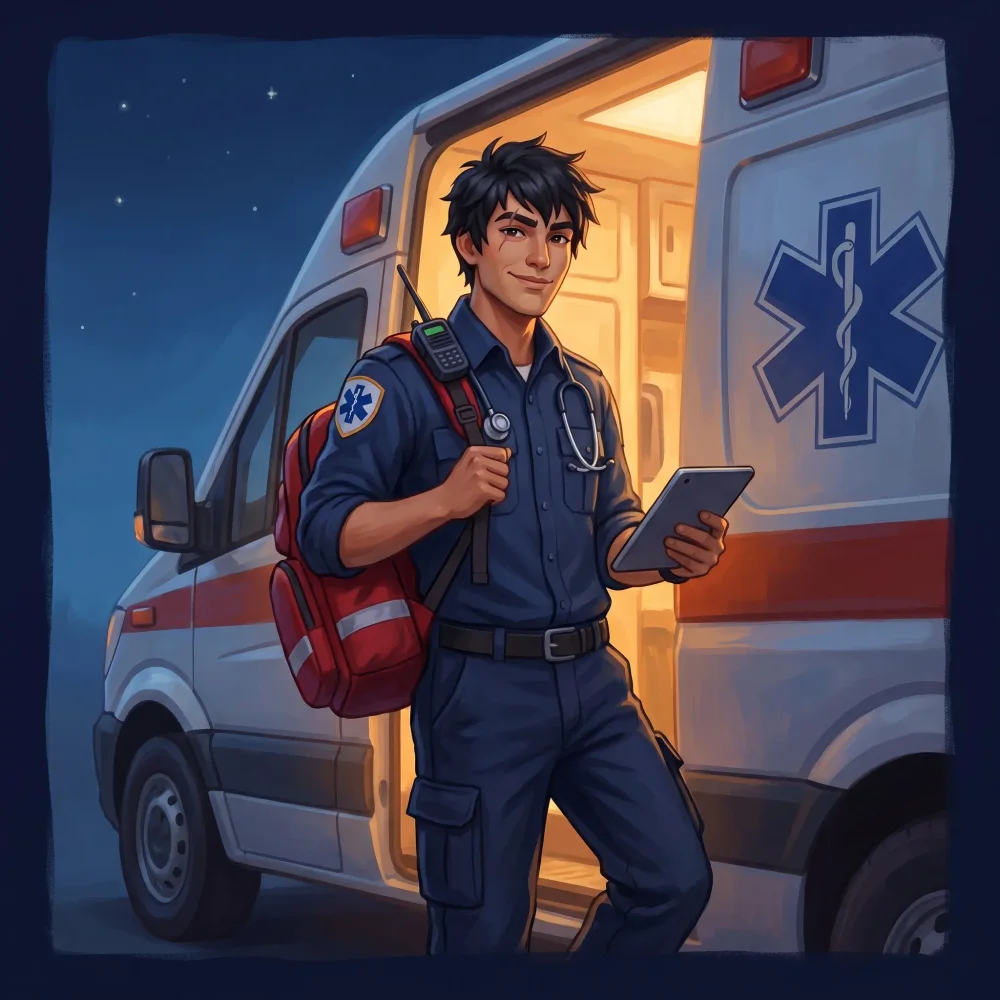
 Lv 9
Lv 9 Lv 9
Lv 9 Lv 9
Lv 9 Lv 9
Lv 9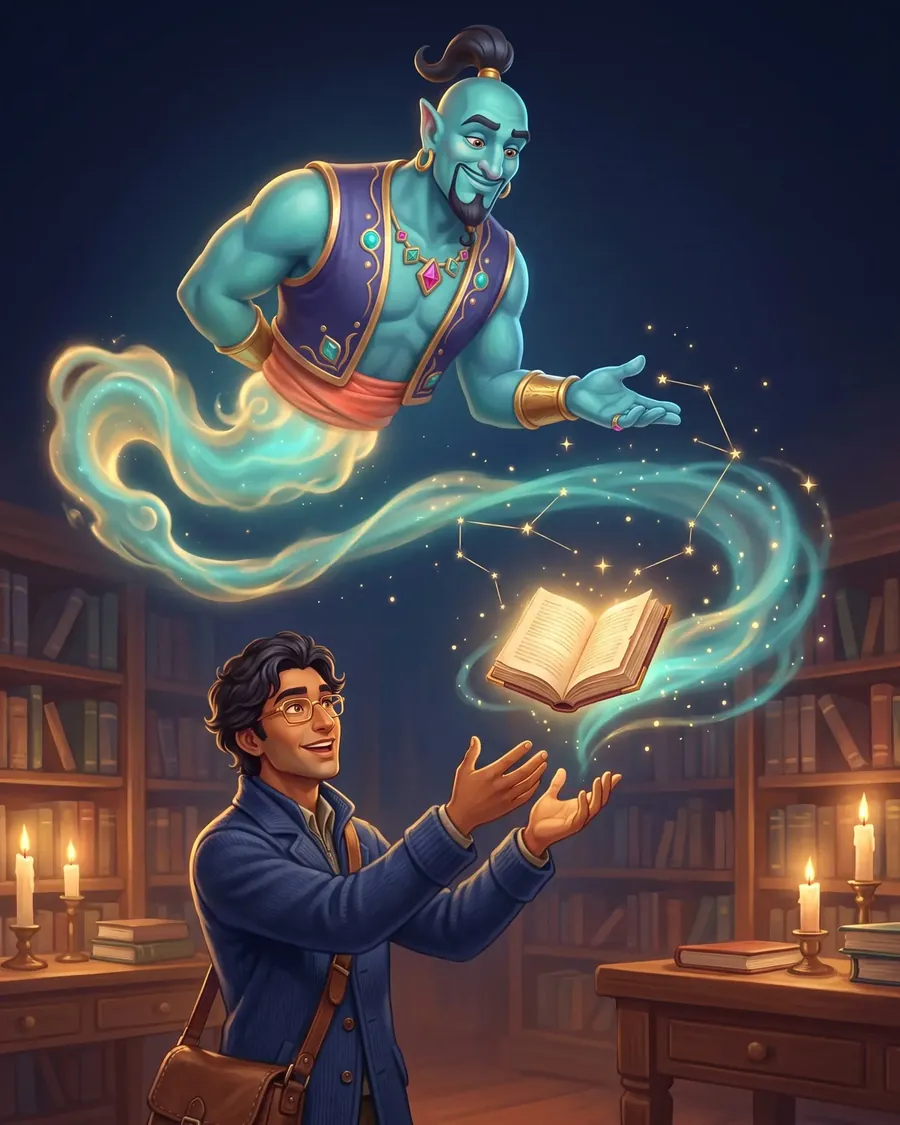


 Mage
Mage Warrior
 Druid
Druid Rogue
Rogue Bard
Bard Paladin